Reverse parking for Taiwan's driving test: what to check first
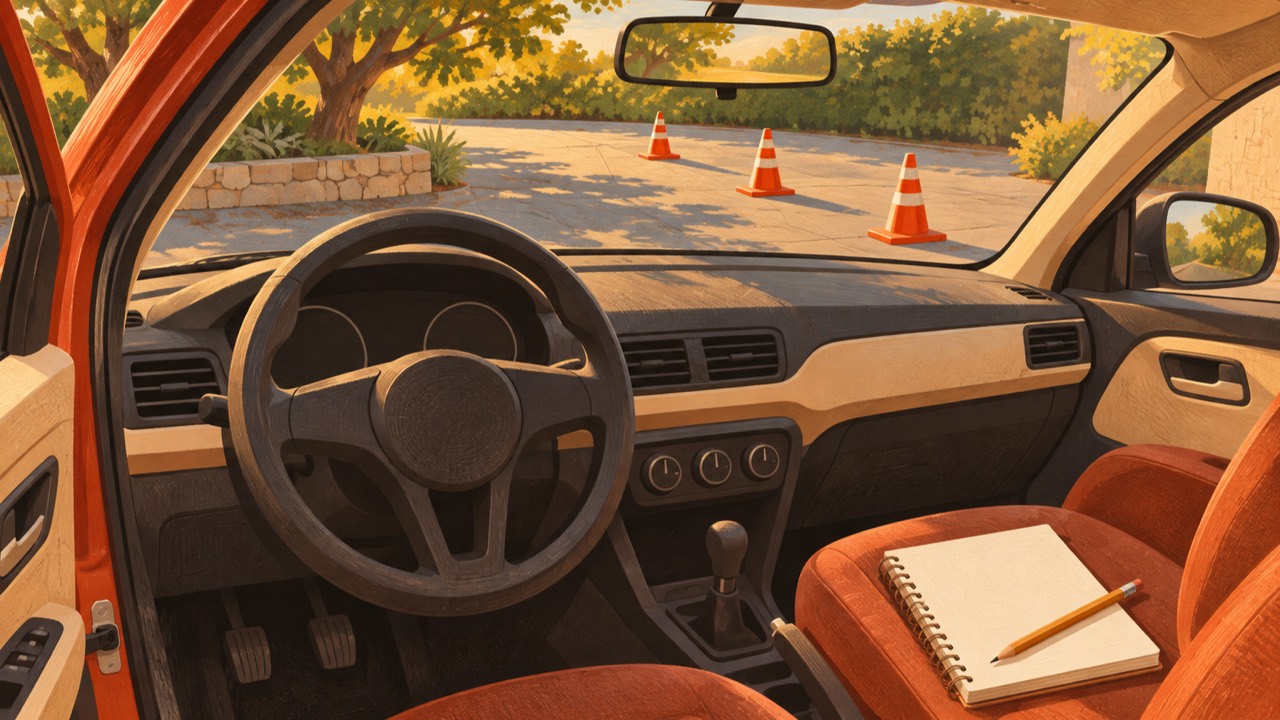
For Taiwan's reverse-parking test, start with seating, mirrors, blind spots, slow control, and the marked boundaries. The test's one-reversing-attempt requirement is separate from everyday parking.
1. Set up your seat and mirrors
The Hsinchu Motor Vehicles Office lists pre-driving checks that include adjusting the seat, head restraint and mirrors, and fastening the seat belt. Finish these before you start reversing so practice and the test follow the same order.
2. Check blind spots and surrounding traffic
The official criteria call for mirror and shoulder checks, looking for surrounding obstacles, pedestrians, and vehicles, and yielding to moving traffic. Observation comes before starting the maneuver.
3. Reverse with the required signal and control
Taiwan requires reverse lights or a hand signal before careful, slow backing with attention to traffic. Test criteria also penalize shifting into reverse while moving forward; stop before changing direction.
4. Watch the test boundaries
The motor vehicles office's reverse-parking item lists deductions for wheels touching the boundary tubing or not stopping inside the marked area; it must be done in one reverse, and the front wheels must also stop inside the marked line. What is checked is the actual position, not just feeling that the car is in.
5. Distinguish test criteria from road rules
The single-reverse condition belongs to this test item. Road rules emphasize careful backing and awareness of others. Practice both the test boundaries and observation skills without treating test restrictions as universal parking rules.
Sources: hmv.thb.gov.tw/cp.aspx?Create=1&n=1498 · law.moj.gov.tw/LawClass/LawAll.aspx?PCode=K0040013 · apps.apple.com/hk/app/%E6%A5%B5%E9%99%90%E5%81%9C%E8%BB%8A%E5%A0%B4-%E9%83%BD%E5%B8%82%E6%8C%91%E6%88%B0/id6816430472

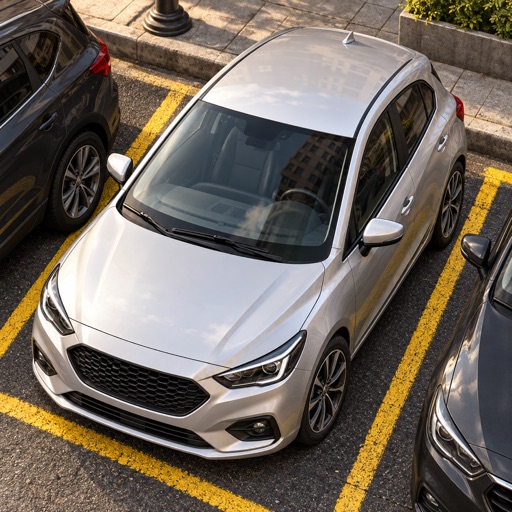 Precision Parking 3D


 Inside